Deciphering the Fall and Rise in the Net Capital Share
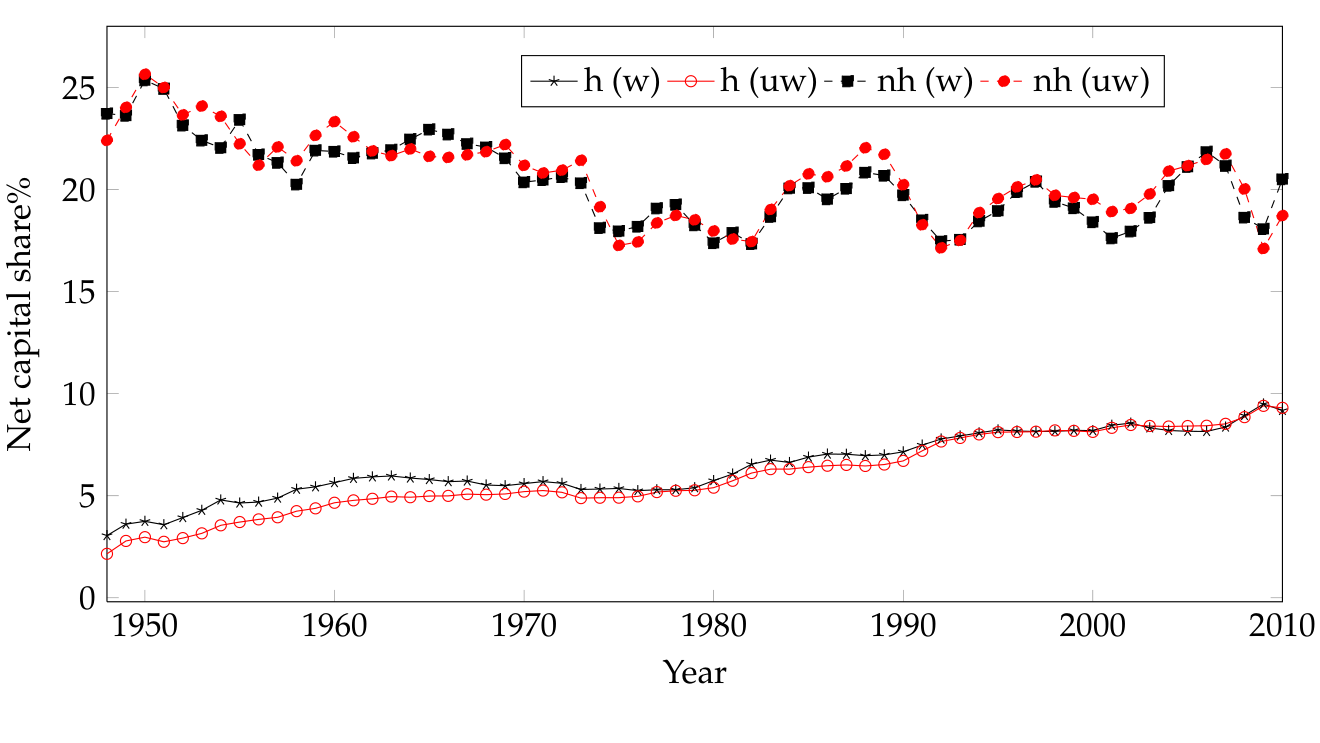
Shows that the long-run rise in capital's share of income documented by Piketty is almost entirely attributable to housing — that is, to land — not to reproducible capital.
Summary
Matthew Rognlie's 2015 Brookings Papers on Economic Activity article is among the most influential modern findings for Georgist economics, though Rognlie did not frame it that way. Responding to Thomas Piketty's Capital in the Twenty-First Century, Rognlie decomposed the rising share of national income going to capital and found that essentially all of the long-run increase across developed economies comes from the housing sector.
Why It Matters for Georgism
Because the value of housing is dominated by the value of the land underneath it — structures depreciate and can be reproduced, locations cannot — Rognlie's result implies that the modern rise in "capital's" share is largely a rise in land rent's share. This is precisely the dynamic Henry George described: as economies grow, the gains accrue disproportionately to landowners. The finding was independently confirmed with European data by Bonnet et al. (2021) and reframes inequality debates around land rather than capital in the productive sense.
Bears On
- Matthew Rognlie
- Outcome: Most of the modern rise in the capital share is land, not capital
- Long-run price evidence: Knoll, Schularick & Steger (2017) — 140 years of house-price data showing the post-1950 boom is overwhelmingly a land-price boom, the historical counterpart to Rognlie's decomposition
Sources
- Matthew Rognlie (2015), "Deciphering the Fall and Rise in the Net Capital Share," Brookings Papers on Economic Activity — used for the central finding that the long-run rise in the net capital share is concentrated in housing/land, not in reproducible capital. PDF
- Earlier note: Matthew Rognlie (2014), "A Note on Piketty and Diminishing Returns to Capital" — wiki summary. PDF
- European confirmation: Bonnet et al. (2021) — wiki summary