Wiki · Research
Land is Back, It Should Be Taxed, It Can Be Taxed
European Economic Review paper confirming that rising wealth-to-income ratios are driven by land, and showing a land tax can replace capital taxes with no efficiency loss.
Summary
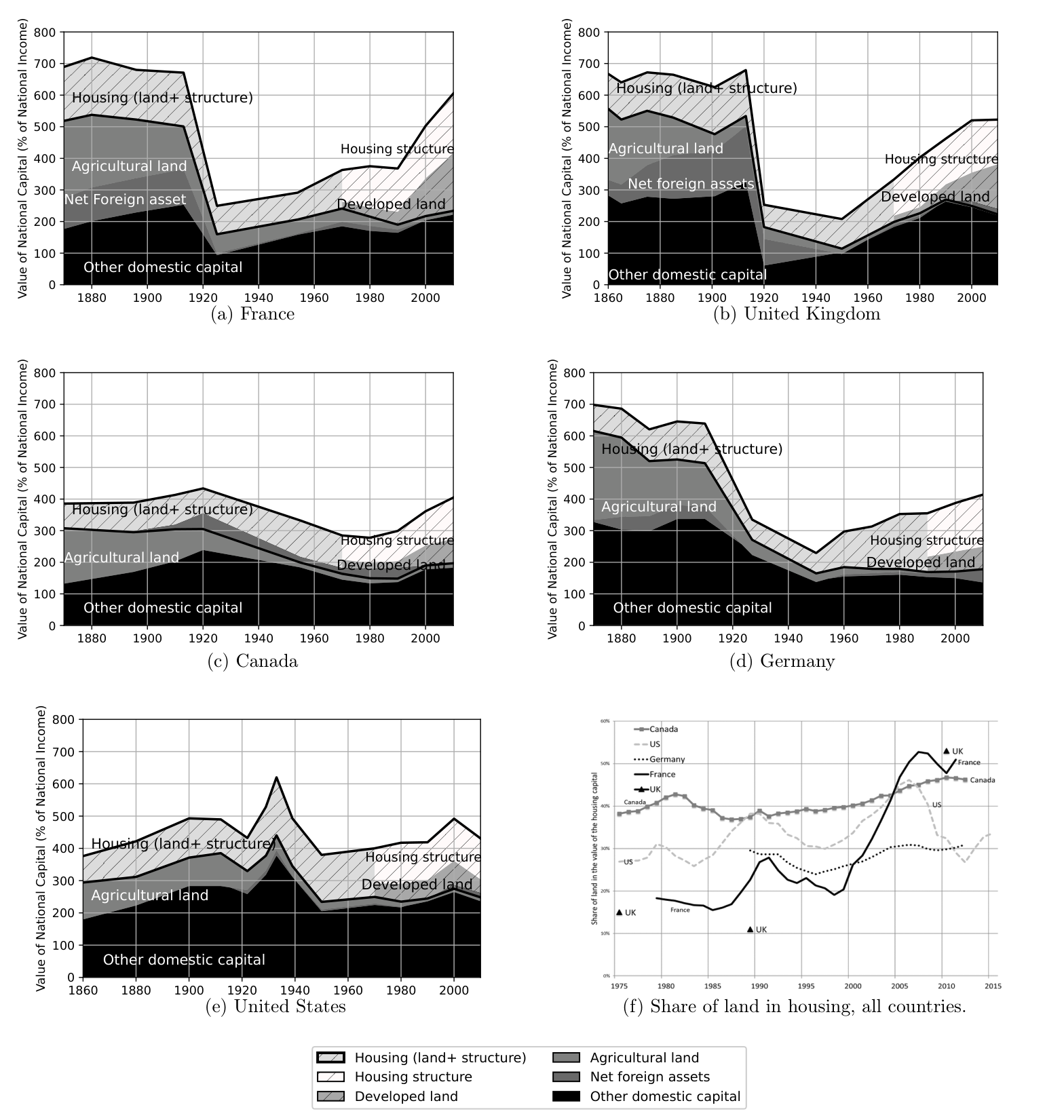
This 2021 European Economic Review paper by Bonnet, Chapelle, Trannoy, and Wasmer is the leading European confirmation of the land-centred view of modern wealth. Its title doubles as a thesis: land is back as the dominant component of wealth; it should be taxed on efficiency and equity grounds; and it can be taxed in practice.
Key Findings
- Land drives the wealth boom. Using French and other European data, the authors show the long-run rise in wealth-to-income ratios is overwhelmingly a rise in land values, not produced capital — independently confirming Rognlie (2015) on a different dataset.
- A land tax dominates a capital tax. They demonstrate that shifting taxation from capital to land raises welfare, because taxing land has no efficiency cost while taxing capital discourages investment.
Bears On
- Outcome: Most of the modern rise in the capital share is land, not capital
- Outcome: LVT can replace capital taxes without efficiency loss
Sources
- Odran Bonnet, Guillaume Chapelle, Alain Trannoy & Etienne Wasmer (2021), "Land is Back, It Should Be Taxed, It Can Be Taxed," European Economic Review 134 — used for the European decomposition showing the modern rise in capital's value is land, and for the feasibility argument that land can be taxed despite assessment concerns. PDF · archived
- US precursor: Rognlie (2015) — wiki summary