Land rent could fund a large share of government
Estimates of total land rent suggest it could fund a substantial fraction — by some accounts most — of government, though figures are sensitive to assumptions.
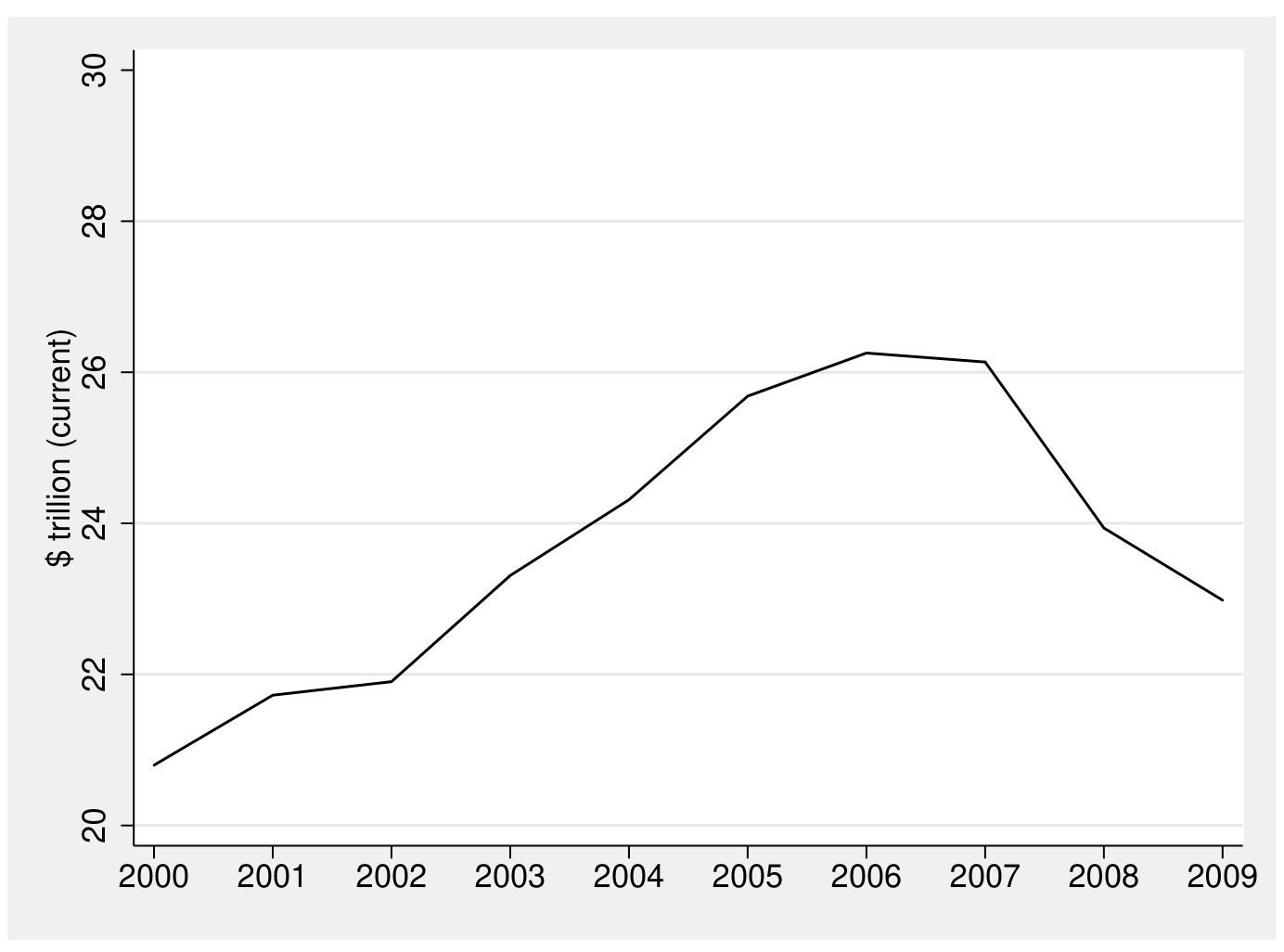
At a glance — Estimates of how much government land rent could fund vary widely with method and scope — from a major share of spending to near-total replacement of existing taxes — so the honest reading is a large but genuinely uncertain fraction. Evidence: Contested (estimates vary widely with method and scope) · 11 supporting sources · 0 challenging Strongest support: Larson (2015) — the BEA study puts contiguous-US land at roughly $23 trillion (2009), the wiki's measured benchmark. No structural counter-evidence is currently wired; see Limits.
The Claim
The total economic rent of land and natural resources is large enough to fund a substantial portion of government spending, potentially replacing many taxes on labour and capital.
The Evidence and the Debate
| View | Argument | Source |
|---|---|---|
| Optimistic | US land rent is "enough and to spare" once hidden rent categories and the ATCOR base-expansion effect are counted | Gaffney (2009) |
| Formal mechanism | Algebraic tax-capitalization model showing untaxing buildings raises the land-tax base by more than the abated revenue (timing, excess-burden, and synergy effects each add to the rise) | Gaffney (1998) |
| Advocate aggregation | US land/resource rent ≈ $3.5T/yr, over a third of GDP, via two back-of-envelope methods — an attributed advocate estimate, not an official figure | Jeffery J. Smith, Counting Bounty (2020), ch. 20 |
| Advocate extrapolation | ~$11T US land value from Federal Reserve Z.1 balance-sheet tables (partial-sector; also documents the Fed's famous negative-land artifact from the land-residual method) — attributed; Larson 2015 remains the wiki's benchmark | Scott Baker, progress.org (2016), from Fed Z.1 |
| Conservative | Currently measured land rent is a smaller share of GDP — enough for a major but not total replacement of existing taxes | mainstream national-accounts estimates |
What each side is counting is clarified by Foldvary's kinetic/potential rent decomposition: measured national-accounts rent is part of kinetic rent; the optimistic case claims potential rent (including tax-suppressed rent) far exceeds it.
The gap turns on two things: what counts as rent (Gaffney includes resource, spectrum, and under-assessed urban rent that standard accounts omit) and whether one credits the ATCOR effect — that abolishing other taxes raises land values, enlarging the LVT base.
Three of the older advocate data points that reach the practitioner-author Lars Doucet's twelve-method aggregate-land-value survey through Smith's Counting Bounty are worth pinning to source. Steven Cord (How Much Revenue Would a Full Land Value Tax Yield?, American Journal of Economics and Sociology 44(3), 1985, pp. 279–293) capitalised 1981 Census-Bureau and Federal-Reserve assessed land values — adjusted upward for under-assessment, tax-exempt land, and unassessed federal holdings — at a conservative 14%, arriving at a full-land-rent yield of roughly $658 billion, which he put at 28% of 1981 national income (nearly two-thirds of all tax revenue then levied). Counting Bounty and Doucet render this as the ~24% "Cord" line; the primary paper's own headline is 28%. Richard Ebeling (There Is No Social Security Santa Claus, Future of Freedom Foundation, 21 Dec 2015) valued the federal government's land and mineral reserves at about $5.5 trillion (Smith extrapolates this to $6.6T for 2020) — a figure Doucet flags as method-free and carries only as a bullish outlier. The lone machine-learning estimate in the span is the PLACES Lab (Christoph Nolte's group at Boston University) high-resolution fair-market-value map of US private land (Nolte 2020, PNAS 117(47):29577–29583; data at placeslab.org), which despite its very different method produces a single-year total that tracks the cost-approach cluster.
The Evidence in Detail
The measured base first. Larson (2015) — the BEA working paper — puts contiguous-US land at roughly $23 trillion (2009) using hedonic methods; Albouy, Ehrlich & Shin (2018) supply the first transaction-based index for every US metro, finding urban land worth over twice GDP, with just five metros holding 48% of it; and Davis & Heathcote (2007) built the widely-used quarterly residential-land price series the field runs on. On the institutional side, the Mirrlees Review (2011) — the UK's most authoritative modern tax review — concludes land value should be taxed and proposes replacing business rates with an LVT. The advocacy wing's national worked example is Common Wealth Canada's 2023 report: its January 2023 version estimates ~$421B/year of newly collectible rent across all resource categories, $362.5B of it from a national LVT; the publisher's July 2023 revision replaced the land method (average land-price growth) with a 5.5% capitalization rate on StatCan land values, cutting the net-new LVT figure to $194B/year. An advocate estimate, carried as such alongside the table's other attributed aggregations — and the ~46% cut between the publisher's own versions is itself a caution about how method-sensitive these aggregates are. Its two methodological templates are also on this wiki: Prosper Australia's Total Resource Rents of Australia (2013), which tallies Australian rents at 23.6% of GDP and finds rent taxation could raise 87% of all-levels government revenue, and the University of Vermont's Valuing Common Assets study (2008), which costs Vermont's uncollected common-asset rent at ~$1.2B/year — roughly 43% of the state's in-state revenue. Both are advocacy/student-project estimates, carried with the same attribution caveats. A peer-reviewed addition to this cross-national picture is Schläpfer's 2026 Ecological Economics paper on Switzerland, which estimates total Swiss "resource rents" (a four-part concept spanning traditional rent, value gains, regulatory transfers, and externalities) at CHF 298 billion/year — 42% of GDP and more than the country's combined tax revenue — with urban land alone accounting for 89% of the total; a companion open-access paper by the same author revises the headline total down to roughly CHF 159 billion using a narrower accounting, underscoring how sensitive these aggregates remain to category boundaries even in peer-reviewed work.
Burgess: LVT as Alternative to Taxation
Ronald Burgess's Public Revenue Without Taxation (1993) argues that land value taxation is not merely a better tax but the legitimate replacement for taxation altogether. Burgess traces the argument from the Physiocratic tradition through Henry George, arguing that public revenue should come from the community-created rental value of land rather than from coercive taxation of productive activity (Burgess 1993, Ch. 1–3). Burgess develops the ATCOR argument — that all taxation comes out of rent — and contends that replacing existing taxes with LVT would actually expand the revenue base by unburdening production (Burgess 1993, Ch. 4).
Burgess also addresses the inflation dimension, arguing that failure to collect land rent forces governments to monetize debt, creating inflation that disproportionately harms wage-earners (Burgess 1993, Ch. 5). He connects unemployment to land speculation, arguing that high land prices price labour out of productive opportunities (Burgess 1993, Ch. 6).
See: Public Revenue Without Taxation (Burgess)
Strength of Evidence
Contested. That land rent is large is well established; how large relative to government depends heavily on method. Honest framing: enough to be a major revenue source, with full replacement an open question.
An attributed high-end estimate. Foldvary's 'geo-rent' projection — that land rent could fund roughly half of US government revenue at all levels — is an advocate estimate, not a consensus figure, and sits at the optimistic end of the range above.
See Also
- Jeffery Johnson Smith — author of Counting Bounty (2020), whose ~$44T US land-value estimate is the highest figure in Land is a Big Deal's comparison table
- Barr, Smith & Kulkarni (2018): What's Manhattan Worth? — a transaction-based estimate ($1.47T, 2014) of Manhattan's developable land value alone
- Steven Cord — Georgist scholar whose Census/Federal Reserve-based land-rent estimates (cited in Harrison's The Power in the Land) are among the empirical inputs to the revenue-sufficiency debate, and who led the on-the-ground campaign behind Pennsylvania's split-rate tax adoptions
- Kuminoff & Pope — hedonic land/structure separation at scale, which also disciplines the residual method's over-attribution to land · Hudson: Where Did All the Land Go? — the understatement critique of official land accounts (attributed)
- Tideman, Kumhof, Hudson & Goodhart (2021) — the macro-model tax-shift case (stub, pending full read)
- Dwyer (2003), Taxable Capacity of Australian Land — the national calculation (stub, pending full read)
- World Bank, The Changing Wealth of Nations 2021 — wealth-accounting scale evidence
- ATCOR · Single Tax · Objection: LVT can't raise enough revenue
At the measurement layer, Kuminoff & Pope separate land from structure value hedonically across a million-plus transactions — establishing that the land component is large and separable, while cautioning that residual methods over-attribute boom-bust swings to land.
Sources
- Mason Gaffney (2009), "The Hidden Taxable Capacity of Land: Enough and to Spare" — used for the estimate that land's taxable capacity is far larger than conventional assessments imply (once ATCOR/EBCOR effects are counted). wiki summary · PDF
- Counterpoint framing: Objection — LVT can't raise enough revenue — used as the steelmanned opposing view on revenue sufficiency.
- Mason Gaffney (1998), "The Philosophy of Public Finance," Ch. 7 in Fred Harrison (ed.), The Losses of Nations (Othila Press, 1998) — used for the algebraic demonstration that a revenue-neutral shift from building taxes to land taxes raises the land-tax base by more than the abated revenue (C-claim; theoretical model). wiki summary
- Ronald Burgess, Public Revenue Without Taxation (London: Shepheard-Walwyn, 1993) — used for the ATCOR revenue argument and the case that LVT replaces rather than supplements taxation (C-claims). Book page