

Originally published on Progress and Poverty on June 3, 2026. Republished on Progress.org with permission.

This post originally appeared on Sightline Institute’s blog. The Center for Land Economics is grateful for Sightline’s support in assembling the mentioned report, and continuing support for land value tax work in Washington state.
Takeaways:
Washington’s property tax system quietly rewards landowners who sit on vacant lots in our cities, while penalizing investment in the new homes, shops, and jobs that create real community value. The fix for this counterproductive dynamic is a land value tax that lowers the tax on buildings and raises it on land.
A new report from the Center for Land Economics proposes a policy that would exempt building value from property tax to create a revenue-neutral tax shift from buildings to land, replicating a land value tax while adhering to Washington state’s tax rules.
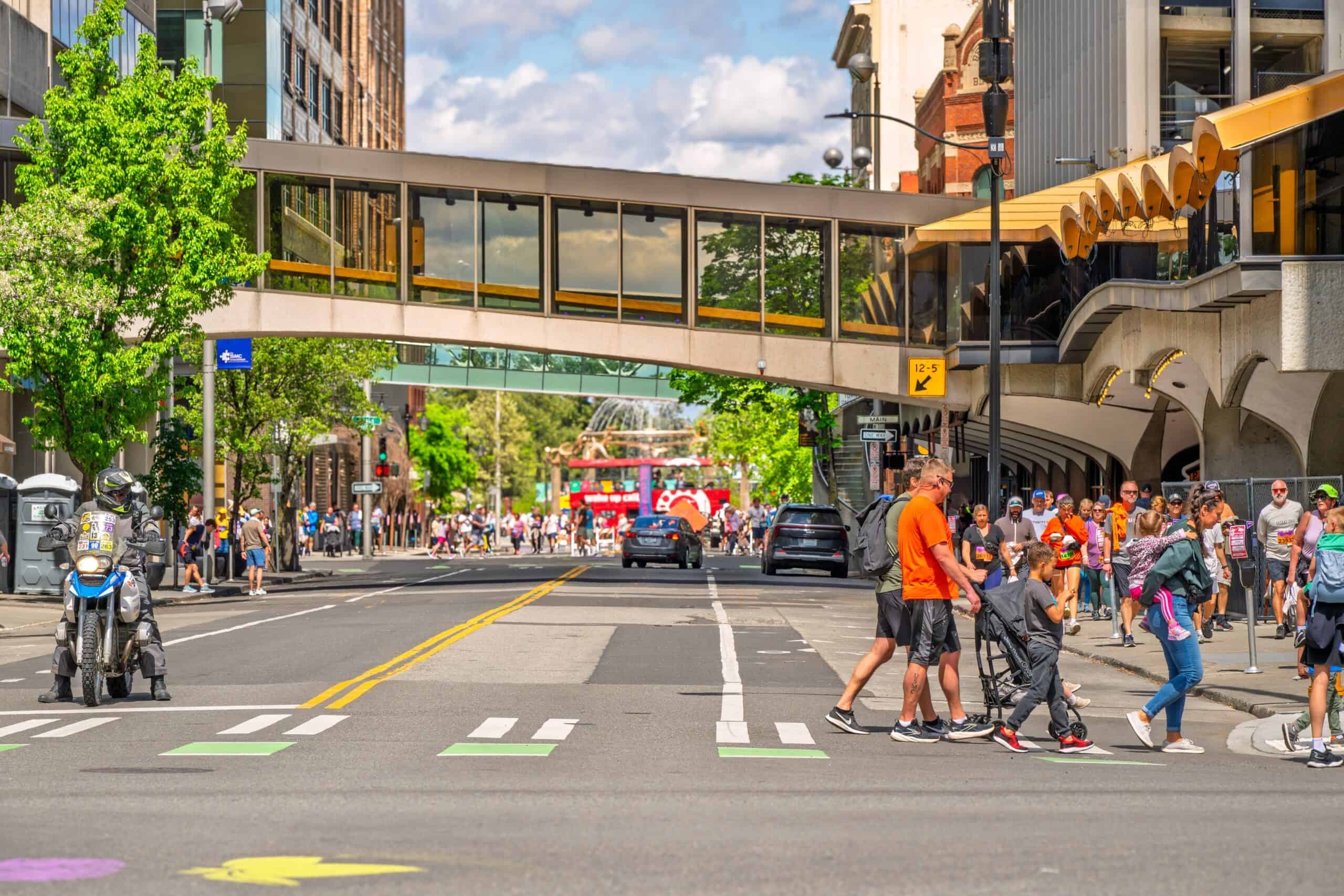
The report models this approach in the city of Spokane, finding that it would encourage the in-city homebuilding that cities need to curb prices, and discourage vacant lots and land speculation; it would flip the incentive structure without touching the city’s bottom line.
Most homeowners wouldn’t see much change in their tax bill at all, while the shift would be progressive in lower-income and more racially diverse neighborhoods, where homeowners would see larger tax reductions.
By granting this authority through the Vibrant Cities Act, the Washington legislature would empower cities to use their own tax code to cool land speculation, spur homebuilding, and return community-created land value back to the public.
In communities across the state, Washingtonians are reeling from high home prices and rents caused by the state’s severe shortage of homes. In cities and towns, big and small, from Bellingham to Walla Walla, people need more affordable home choices. At the same time, thousands of acres of vacant and underused lots pervade many of our urban neighborhoods, even in otherwise dynamic downtowns.
Progress and Poverty is a reader-supported publication. To receive new posts and support my work, consider becoming a free or paid subscriber.
